
Postpartum Depression Treatment: Beyond Medication to Holistic Recovery | Safe and Sound
After giving birth, many women face significant physical, emotional, and daily life changes. While some gradually adapt to their new role, others experience prolonged sadness, loss of motivation, exhaustion, or difficulty connecting with their baby. As these difficulties begin to impact their quality of life, learning about postpartum depression treatment often becomes a concern for many mothers and their families.
In reality, this is often a holistic recovery process, combining professional support, mental health care, family companionship, and appropriate daily life changes. Understanding treatment correctly can help those dealing with postpartum depression access appropriate support sooner and reduce unnecessary stress on their recovery journey.
Why isn't there a one-size-fits-all method?
Treatment for postpartum depression is not a one-size-fits-all approach. Each mother may experience different emotional challenges, family circumstances, physical health, and the severity of symptoms. Therefore, treatment plans often need to be individualized based on professional assessment rather than applying a single method to all cases.
Not all cases are treated the same way.
Postpartum depression can manifest in varying degrees. Some people experience only mild symptoms such as persistent sadness, frequent crying, or loss of interest in daily activities. Others, however, face significant difficulties in self-care, caring for their baby, or maintaining daily routines.
Different levels of impact mean different support needs. Some cases may be best addressed with psychotherapy and mental health care measures. Other cases may require a combination of antidepressants or more intensive forms of support.
It is crucial that the treatment plan is not decided based on a single symptom but rather takes into account the mental health, physical health, living circumstances, and individual needs of each mother.
When can medication be considered?
Antidepressants are one of the commonly used treatments for many cases of postpartum depression. However, not all mothers experiencing postpartum depression need medication, and its use should always be prescribed and monitored by a specialist doctor.
Typically, the decision to use medication may be based on several factors, such as:
- Severity of symptoms.
- The period of emotional difficulty has been prolonged.
- The extent to which it affects self-care or the baby's care.
- Risks to the mother's health and safety.
- The doctor's overall assessment of the current condition.
Some people worry that antidepressants are unsafe during breastfeeding. In reality, doctors can consider which medications are more suitable for each specific case. Therefore, instead of self-treating or searching for medication online, mothers experiencing mental health issues should discuss their condition directly with their doctor for personalized advice.

Why does psychotherapy often play such an important role?
Many new mothers face a multitude of changes simultaneously, such as the pressures of caring for their child, prolonged sleep deprivation, changing roles within the family, anxieties about their ability to be a mother, or difficulties in relationships. These are factors that medication cannot completely address.
Through working with a psychologist or therapist, the mother can:
- To understand better what I am going through.
- Identify the thoughts and feelings that are contributing to the persistence of your current difficulties.
- Develop healthier ways to cope with life's pressures.
- Increases the ability to adapt to postpartum changes.
- Gradually restore a sense of control over your life and confidence in your role as a mother.
For many mothers, being listened to, understood, and supported during this period can bring about changes just as significant as any other treatment. This is also why psychotherapy is often considered an important part of a comprehensive treatment plan, rather than just an additional form of support.
>> See also: 5 Postpartum Depression Myths Debunked by Doctors
The journey to recovery from postpartum depression is not the same for everyone.
This is what causes many mothers to feel confused or frustrated during treatment. Many wonder why others seem to improve quite quickly while they, despite their best efforts, still find it difficult.
However, mental health recovery rarely follows the same path for everyone. Postpartum depression is a condition influenced by many different factors, and the rate of recovery often does not reflect the level of effort put in by the mother seeking psychological support.
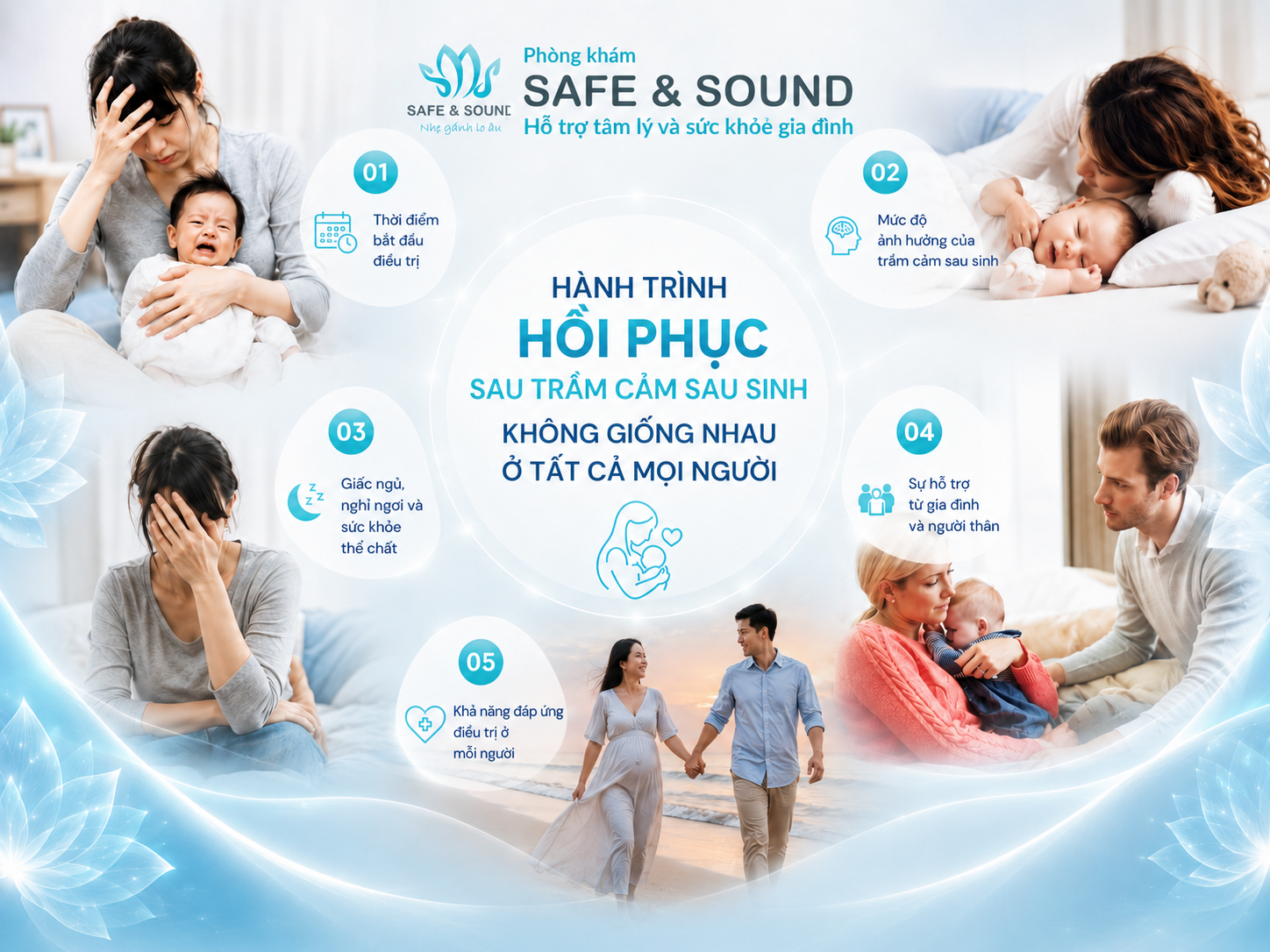
Factor 1: The timing of treatment initiation can make a difference.
Those who are identified early and receive professional support from the initial stages often have a greater chance of managing symptoms before they profoundly affect their lives.
Conversely, when difficulties have persisted for months before support is provided, the recovery process may sometimes require more time. This doesn't mean treatment is ineffective, but rather reflects the fact that the difficulties have existed long enough to impact many aspects of life.
Therefore, the speed of recovery doesn't always reflect the level of effort mothers put into dealing with postpartum depression. Some begin treatment when symptoms are still in their early stages, while others only seek support when difficulties have accumulated over a long period.
Factor 2: The severity of postpartum depression varies from person to person.
Postpartum depression doesn't manifest the same way in everyone. Some people can maintain most daily activities despite experiencing significant emotional distress, while others are significantly affected in their ability to care for themselves, their baby, their work, or their family relationships.
Different levels of impact mean that support needs and recovery times can also vary. This is also why comparing your own treatment journey to others is often meaningless. Two people diagnosed with postpartum depression may be facing vastly different levels of difficulty.
Factor 3: Sleep, rest, and physical health play a crucial role.
Unlike many other forms of depression, postpartum women often face significant physical changes and the responsibilities of caring for a baby simultaneously. Prolonged sleep deprivation, constant fatigue, or insufficient rest can worsen symptoms.
In many cases, improving sleep quality or reducing childcare stress cannot replace professional treatment, but it can create more favorable conditions for recovery.
This also helps explain why two people with similar symptom levels may experience different rates of improvement. Someone who receives more support in caring for their baby may have a better chance of rest and recovery than someone who has to shoulder most of the daily responsibilities alone.
Factor 4: Why shouldn't a mother recover alone?
Besides professional treatment, the living environment and support from those around you can significantly influence the recovery journey.
Many postpartum mothers not only face symptoms of depression but also the pressures of caring for their child, managing household chores, navigating relationship changes, or feeling the need to be stronger each day. When these challenges occur in a supportive environment, the recovery process can become significantly more difficult.
Conversely, support from family, partners, or close friends can help mothers feel heard, share responsibilities, and reduce feelings of isolation. In many cases, what helps someone persevere with treatment is not just medication or psychotherapy but also the feeling that they don't have to face everything alone.
Factor 5: The ability to respond to treatment is not the same for everyone.
A method that works effectively for one person may not necessarily produce the same results for another. During treatment, it sometimes takes time to assess, monitor, and adjust the support plan to find the most suitable approach.
What often discourages mothers isn't always the symptoms of postpartum depression but sometimes the feeling that they are recovering more slowly than others. However, the rate of improvement doesn't reflect the level of effort or determination. Each person has different life circumstances, levels of impact from postpartum depression, and responses to treatment. More importantly, it's crucial to recognize your own changes over time and maintain a support plan that's appropriate for your current situation.
When should you seek professional help?
Just like physical health, mental health is often more effectively supported when difficulties are identified early. Timely assessment can help mothers better understand what they are going through and access support methods that are more appropriate to their individual needs.
The following signs may indicate that a mother should consider seeking professional help:
|
Signs to watch out for |
Why should we care? |
|
Symptoms lasting for 2 weeks or more |
Persistent emotional changes may no longer be just a temporary reaction after childbirth. |
|
Difficulty taking care of yourself or your baby. |
This is a sign that the symptoms are significantly affecting daily life. |
|
Lost interest in most activities. |
A common symptom in many cases of postpartum depression. |
|
Persistent feelings of despair, guilt, or self-blame. |
This can increase the difficulty in caring for yourself and your baby. |
|
Thoughts of harming yourself or your baby appear. |
This is a situation that requires professional assistance as soon as possible. |
In addition to the signs mentioned above, a mother may also consider seeking support if she feels she has tried her best but still cannot improve her current situation or frequently feels exhausted from having to cope with prolonged difficulties on her own.
 At SNS (Safe & Sound Clinic), mental health issues are approached with respect for each mother's individual experience. Through attentive listening, comprehensive assessment, and professional exchange, our team of experts helps mothers experiencing mental health issues better understand what they are going through, and together we develop a care plan tailored to each individual's needs and circumstances.
>> See also: Postpartum Care: How to Cope with Postpartum Depression | Safe and Sound
Conclude
Treating postpartum depression is not just about reducing emotional symptoms but also about helping mothers gradually regain balance in their lives and their role as mothers. Depending on the individual case, the treatment plan may include psychotherapy, medication, and various other forms of support to meet each person's specific needs.
It's important not to wait until difficulties become too severe before seeking support. Early assessment and support can help mothers better understand what they are going through and access appropriate care.
At SNS (Safe & Sound Clinic), mental health is approached through a holistic, empathetic, and respectful approach to individual experiences, aiming to support each person in finding balance in a way that suits them.